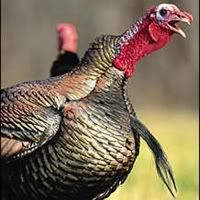
Turkeys are, like most birds, very vocal creatures. Like humans use their language to communicate with each other so do turkeys. They make a variety of sounds to relate messages to each other or “show” emotions. A smart turkey hunter knows what these sounds are and their meaning.
To become a successful turkey hunter it is imperative to learn how to imitate turkey calls on a turkey call. The most common turkey calls that every hunter should use are:

Friction Calls:
These calls are easy to learn even for a beginner and produce an authentic turkey sound.
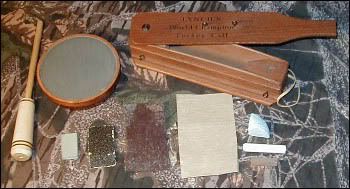
Friction calls come in different models. The slate call is a wooden or plastic dish covered with slate, glass or aluminum. The sound is produced with a stick, called striker. Strikers are made of wood, plastic or fiberglass.
Another friction call that works very well and should be in every turkey hunters gadget box is the paddle box cal. This is the father of all turkey calls. The paddle box is made of wood. A hollow box, the sound chamber and attached at the open end is the paddle. By moving the paddle over the lips of the box the sound is produced.
There are more friction calls but the slate and box calls are the simplest and most effective to use and learn.
Mouth diaphragms:
These calls are placed in the mouth; exhaling air trough the mouth produces the sound. These calls are extremely difficult to learn. The positive side of these calls is that they free up the hands and no movement is needed to produce the sound. The mouth diaphragms are especially good for close work as an incoming turkey looks for movement.
Below I listed most of the common sounds a turkey makes.
PeepingA turkey poult makes its first sound before it hatches.
Hatching YelpThe hen answers the poults peeping with the Hatching Yelp. This helps bond the hen and the chicks together and helps the hen recognize each of her chicks.
Predator AlarmWhen a predator is flying over or nearby the nest, the hen will utter a guttural, segmented call to warn the poults who will then duck under the hens body.
Plain YelpThe yelp is a multi-purpose, rhythmic, 3 to 15 note series used to locate other turkeys during the day. The turkey yelp does follow a certain cadence but if you listen to wild turkeys call, they often have skips and half-beats in their series of calls and the number of yelps varies tremendously. Yelping also varies in volume and intensity. Some series of yelps stay about the same volume throughout while others start low, rise in volume and then tail off towards the end. Try and vary your yelping and you'll have much more success calling turkeys.
The yelp is sometimes referred to as the "love call' of the hen and is the one call every hunter should master. This call is used by both hens and gobblers. The gobbler yelp is slower and more deep throated than the hen.
Lost YelpA long series of yelps (10 to 20+) used by turkeys when they are lost and trying to call other turkeys to them. This can be used at random in the spring to attract long distance gobblers.
Tree YelpThe tree yelp is a softer, shorter version of the standard yelp. Turkeys of both sexes tree yelp each morning. This call lets the other birds know that all is well after they wake up in the morning.
CluckA soft to loud staccato call used to locate and communicate with other turkeys. It basically is saying "I am here, where are you?". This call is used by both hens and gobblers. Turkeys cluck all of the time and it is by far their most used call.
CuttCutting is a fast irregular series of clucks used by lost or lonely hens who are searching for other turkeys. It is an especially effective call for the hunter in the spring because hens use cutting to announce to gobblers they are ready to mate. They are usually loud and aggressive and last anywhere from 5 to 15 seconds in duration.
CackleThis is a call most often used by hens when flying up or down from their roosts. It is a 5 to 20+ note call that is also used when flying over clear openings, water ,etc. A cackle is comprised of fast, irregular clucks and yelps. It is followed up with more subtle clucks when the turkey hits the ground. This call varies quite a bit and I've included several samples of fly down cackles.
PurrA purr is a soft, fluttering or trilling call that is used by both hens and gobblers. It has several meanings and is most commonly thought of as a call used to communicate contentment and relaxation when the flock is together. It is also used by birds while they are feeding and in this case it is more of a "spacing" call where the birds purr to tell the other birds "I'm feeding here, give me some room." This is a very good call to coax the gobbler in the last few yards. There is often a cluck before and sometimes after a purr.
Aggravated or Fighting PurrThis is the loud aggressive purr emitted by gobblers and jakes as they posture to fight for dominance and the right to breed. Hens will also purr aggressively when they are upset and looking for a fight.
Get a couple of push-pull turkey calls and give the fighting purrs a try this spring. Turkeys love a good fight and you'll sometimes be stampeded by a group running up to get in on the fun. It is also a great call for the fall since turkeys are very actively fighting and establishing pecking orders during this season.
GobbleToms gobble for two main reasons - 1) To attract hens and 2) to proclaim their dominance over subordinate males. They will, however, shock gobble to just about any loud noise. The typical gobble lasts about 2-3 seconds. Most gobblers can control the intensity of their gobbling and generally older toms will have much deeper, full-throated gobbles. But don't let the gobbling fool you. Hens have been known to gobble and have a try at strutting also.
Spitting and DrummingA two note pffffft, duuuuuuuummmmmm vocalization forced from a gobblers chest. He drums for the same reason he gobbles---to attract hens. He can drum softly or loudly depending on the location of the hens. On clear, calm days, drumming can be heard as far away as 100 yards. Simulating spitting and drumming is a very effective way to call in turkeys.
Since it is such a low-pitched sound it is very difficult to hear and/or record this sound. Once you've heard it though, you'll never forget it and I've often located turkeys but stopping and listening very carefully for the Spit 'n Drum.
PuttThe putt is a loud, sharp alarm call used when a turkey senses danger or when they see something that seems out of place. Essentially, it is a very loud cluck but with a different meaning. This is one you don't want to hear since it usually means you've been spotted and that the turkey is getting out of there in a hurry.
Kee-KeeThis is the 3-note whistle made by young turkeys when they are lost. It's a very good call for the fall to call in scattered turkeys. I've always found it interesting they call it a kee-kee when a more appropriate name would be kee-kee-kee.
Kee-Kee RunThis is the lost call of the young consisting of several whistles followed by 2 or three yelps like this kee-kee-kee-yelp-yelp. Use this in the spring sporadically with your other yelping. Occasionally, a jake will respond to the call with yelping of his own.
----------------------------------
To inquire or book a turkey calling seminar, or any of our other seminar topics, please
Email me for more information and dates availability.