Friday, December 22, 2006

Youngest Holder archery World Slam in the World

I searched the web for some information about wild turkeys and came across the most amazing website of Turkey Hunter Keenan Adams. He is the holder of eight, that’s right 8, Turkey World Slams. Here are the records listed in detail.

1st Youngest World Slam Turkey Holder
1st and Only Person to Hold 6 World Slams
Youngest person ever to take a World Slam in turkey hunting with a Matthews Bow.
Holder of Heaviest Ocellated Bird on record with the NTWF (17.4 pounds)
Holder of Best Typical Archery with NWTF
Holder of Best Overall Typical with NWTF (Ocellated Turkey)
Total of 74 Turkeys Harvested on record with NWTF

Any which way you look at it, this is a huge achievement for any turkey hunter. But here comes the real stunner. Keenan is only 12 years old. He is the youngest hunter in the world to hold such a prestigious lineup of turkey hunting achievements. Keenan seems to be way ahead of his age and in today’s world a refreshing change from what we are used to hear about youth. According to his website he combines his enthusiasm for turkey hunting with family, school, church and other sports that have made Keenan an exceptional example of what well-rounded means.

My hat goes off to that young man with the hope that he will inspire many other young kids with his exceptional personal and hunting achievements.

Please visit his website you will like what you see. while you there drop him a line to say hello and how well he's doing for his age.

Wednesday, December 20, 2006

New Blog

I am happy to announce that I have added a new and unique blog to the Othmar Vohringer Website and blog network.

The Outdoor News Daily, is a breaking news resource for the outdoor writers and informed outdoor person. You can find the latest news on all aspects of hunting, fishing and the great outdoors from around North America and the world all in one convenient place at the click of a button.

Monday, December 18, 2006

Heirloom Custom Turkey Calls

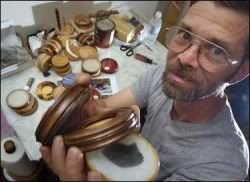
Brian Warner started making turkey calls as a therapy to help stay focused while suffering from esophageal cancer and recovering from a six-bypass heart surgery.

Brian’s love for wood working, his creative mind and knowledge of turkeys was the perfect combination for creating, what today are, truly remarkable turkey calls. Brian Warner offers custom turkey calls and then he offers customized turkey calls– let me explain.

Custom Turkey Calls

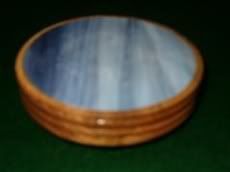
Brian Warner uses different types of wood, knowing that each wood sounds a little different. From this wood he cuts and carves the body of the call. Depending on the sound he strives for the pots are larger or smaller, thick walled or thin. The pot then is covered with a special glass disc that Brian has cut to exact specifications. The final moment comes when he uses different wood strikers to produce the sound. This is called hand tuning and is a long process until the perfect match of striker, glass and call pot is found that produces the exact sound Brian wants.

It is a process of one handcrafted, hand-tuned call at a time- unlike the mass production of commercial calls produced in a factory where workers, without any clue about turkeys or turkey hunting, assemble these items. The glass Brian uses is either natural see-through or stained in different colors to add a special touch. Some of the calls come with two different surfaces: on one side the call sounds raspy and on the other side higher pitched. Every hunter that has been hunting turkeys for a year or two knows how important it is at times to sound like two or even three different turkeys. Brian includes that multi-sound option into one call.

Customized Turkey Calls

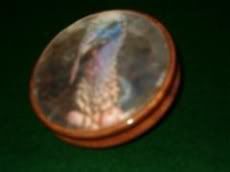
These are calls that are especially made to order. Many seasoned turkey hunters have very special requirements about their calls and Brian is the call maker to fulfill these special needs. Then there are hunters who simply want a very unique turkey call, perhaps even a picture of a family member, friend or their trophy tom incorporated into the call. Again Brian is the man who can do that.

I have known Brian for some time now and when he sent me a set of turkey calls to field test I was eager to try them out. When the parcel arrived I was very impressed with the craftsmanship and the obvious dedication to detail. The calls looked simply stunning; they were pieces of art. But did they sound right? As a hunter of many years I had pessimistically come to the conclusion that something that looks very good often lacks elsewhere, or the other way around: what works well usually looks ugly. Happily this was not the case! The moment I set the striker on the call to produce a soft yelp I knew I had a winner in my hands. Further field tests convinced me that this set of turkey calls was simply the best calls I have ever had the pleasure to use.

As a turkey hunter my priority is to imitate calls that sound just like real turkeys. Over the years I have tried many different calls -some good, some bad. Since trying Brian’s Heirloom turkey calls I have to say that I would not leave home without one in my turkey vest. The phrase “It sounds just like a real turkey” can certainly be said of Heirloom Custom Turkey calls! In fact I am so convinced by these calls that I readily accepted an offer from Brian Warner to join his Pro-Staff Team.


Here is the latest design from Heirloom Custom Turkey Calls.

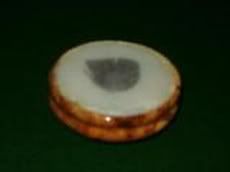
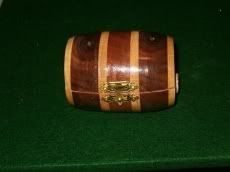
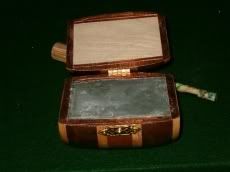
This "Powder Keg Call” is made form Walnut, Mahogany and Oak. This is the very first call we have made using natural slate as a striking surface. Wow are we pleased! The striker comes apart and stores INSIDE the barrel and is fully adjustable. The striker is made of Oak dowel and carbon composite. This is one sweet sounding call.


Here I leave with a few customer comments:
“Brian has sent me some calls and different strikers to field test. I have not yet had the time to write my findings but it is save to say that it has been a very long time since I had a turkey friction call in my hands that felt so good and sounded just perfect. In fact they sound so good not even a turkey will be able to tell the difference and that is what matters most. I wish I could say the same of other calls I had field tested in the past, but I cannot.”
Othmar Vohringer
Outdoor Writer and Seminar Speaker


“There's something awfully special about handling a custom call. These not only have great sounds, but he [Brian Warner of Heirloom Custom Turkey Calls] puts a little something else in them that NOBODY else does. I've been turkey hunting for over twenty years and have hundreds of calls and Brian's the first call maker to come along that's not satisfied with making them like everybody else. They look the same, but he's got a special resonator inside the pot that makes a real difference.”
Toby Benoit
Outdoor Writer and Novelist


“I have one that I had him put a picture of my kids in. It's under the slate and in the handle of the striker. It’s a beauty.”

“Brian, that call that I got from you when you visited here last month is AWESOME!! I've been talking to the turkeys here most every day and the deer hang around also when I use the call!! Wonder if they can tell the difference? Thanks for a GREAT call and I can vouch for you.”


General Information

Heirloom Turkey Calls
Calls: 80 varieties
Cost: around $50.00
To order a Heirloom Custom Turkey Call or get more information contact Brian Warner by Email
or call (318) 949-9008

Brian Warner also produces custom fishing lures. You can read more about Brian’s Fishing Lures here:

Saturday, December 16, 2006

Turkey Scorecard

Here is handy device that every turkey hunter worth his or her salt should own.

The Turkey Scorecard it is a self-contained unit that is durable, portable, and designed to fit in a hunters vest or backpack without taking up valuable space or requiring separate components for scoring.

Every hunter that takes to the field has a competitive instinct that requires validation of the hunt. The Turkey Scorecard provides the measurement of success for minimal expense and it can be used on multiple hunts.

This is a perfect gift for Christmas to give to a enthusiastic turkey hunter.

This item is sold exclusively by the NWTF (National Wild Turkey Federation).

By purchasing this and many other useful products from the NWTF you not only know that you have a product field tested by avid turkey hunters but you also support the NWTF in its unparalleled and tireless effort to promote and preserve the North American wild turkey and habitat conservation.

Turkey Hunters Demonstrate Spirit of Giving

EDGEFIELD, S.C. - Through its Turkey Hunters Care program, the National Wild Turkey Federation is giving to those in need this holiday season with the gift of food.

So far this year, 172 NWTF chapters in 36 states have donated 8,475 turkeys, an equivalent to 50,850 meals.

Through the Turkey Hunters Care program, local NWTF chapter volunteers team up with church ministries, food pantries, children's organizations, homeless shelters, National Guard units and other civic service organizations to donate turkeys.

"Volunteers in our chapters embraced this program because that's the type of people they are," said Dick Rosenlieb, senior vice president of sales and marketing for the NWTF. "We are always trying to come up with ideas to give back to local communities, and this program was a natural fit."

Since the inception of Turkey Hunters Care in 2001, more than 45,000 turkeys have been given out to families in need.

"Providing meals to those who need them most was the goal of the program from the beginning," said NWTF Chief Operations Officer, Carl Brown. "We care about people in the local communities and Turkey Hunters Care is one way for us to give back."

For more information about Turkey Hunters Care, or to find out how you can help, call (800) THE-NWTF.

Source: National Wild Turkey Federation

Tags: , ,

Hunting the Wild Turkey Successful

Here is a short summary of how to become a successful turkey hunter.

Preparing for the Hunt
The first step is to locate a place to hunt. If it is privately owned, be sure to get the landowner’s permission before scouting or hunting. Contact your state wildlife agency for locations of public hunting land. Scout your hunting area before the season. Locate areas of recent turkey activity.
The clothes you wear to hunt are critically important. Complete camouflage is best, including hands and face. Never wear sharply contrasting colors, or the colors red, white, or blue. These colors appear on the heads of gobblers, and someone may mistake them for a turkey. Be sure that white socks, T-shirts, and other non-camouflage clothes do not show. Pennsylvania turkey hunters must know and obey the hunter orange laws for spring and fall turkey hunting seasons. Use florescent orange also as a covering for that successful turkey you harvest and carry out of the woods. Many turkey hunting vests, hats or coats, are now equipped with orange strips. Use them.
Poor vision can lead to accidents. Be sure to have your eyesight checked and corrected before going afield.

The Spring Hunt
Select a calling location in a fairly open area – turkeys often are hesitant to walk into thick brush. If possible, sit with your back against a tree that is wider than your shoulders and taller than your head. This will break up your outline and protect your back from unethical hunters who may be stalking in behind you. However, do not sit behind a deadfall or other cover that will obstruct your vision; try to maintain at least 50 yards visibility in each direction.
As you are selecting your calling location, remember not to get too close to the bird, or you will flush it off of the roost. A distance of 100-150 yards is usually close enough.

Calling
One of the marks of a successful turkey hunter is the ability to call. Those who consistently bring wily turkeys to their calling positions have mastered the bird’s basic vocabulary, and they know how to call, when to call, and when not to call. They learned from real turkeys, other hunters, and from tapes and videos. Here are a few tips:

  • If you’re a beginning hunter, don’t call too often. This is a common mistake. If a turkey is responding to your calls and getting closer, you’ve called enough. He’s coming to find you.
  • Loud, aggressive calling will excite a gobbler and often bring him in a hurry, but this technique is not effective in every situation. If a bird happens to be close, loud calling may scare him away.
  • If you imitate the gobble call in spring, be especially alert to approaching hunters who may think you’re the real thing. Stalking a gobbling turkey is nearly impossible, but some hunters can’t resist trying. Even if you’re on private land, always be alert to anything or anyone responding to your calling.
  • Calling is important, but no more important than being in good position and sitting perfectly still. Turkeys may come from any direction, and they may come in silently. Their eyes are extremely sensitive to motion. If they see motion, they’re instantly suspicious. Patience and a soft cushion to sit on will greatly increase your odds.

If Turkey "Hangs Up"
This is the most frustrating part of turkey hunting. You’ve done your homework and made some good calls, but the turkey won’t come into range.
Don’t be too eager to change your location, especially if the turkey has been silent for awhile. The bird may still be coming to you. Also, unseen hunters may mistake your movement for the bird they’ve heard in the area.
If you decide to change calling locations, remember:

  • If decoys are legal where you hunt and you choose to use one, cover it while moving. Other hunters will be keying on the shape and colors of a turkey.
  • If you suspect there’s another hunter already working the same bird, leave the area – you’d expect the same thing in return.
  • Resist the urge to stalk turkey sounds. It is nearly impossible to sneak up on a turkey, and it is also unethical and could lead to an accident.

The Pay-Off
If everything comes together right, you’ll have a spring gobbler strutting right into your position. The following tips will help you bring that turkey home:
Positively identify your target – in spring, only gobblers (in some states all bearded turkeys) are legal. Know your state laws and obey them.

  • Be sure you have a safe line of sight and backstop.
  • Keep your shots to thirty yards or less.
  • Don’t shoot until the turkey’s head and neck are extended.
  • Aim for the base of the head.
  • After firing, put on you gun’s safety and quickly approach the downed bird to assure it’s a clean kill.

Real turkey hunters know that success is not measured in the length of the beard or spurs, or even the tagging of a bird. Success is measured in the enjoyment you receive from participating in the great sport. It’s the gobble, not the gobbler, that makes this hunt so special. The sound of the turkey on a distant ridge is enough to fill your game bag with wonderful memories. And the times you are able to outsmart one of the wariest creatures in the woods –well, that’s just icing on the cake.
Working a gobbler in close enough to see him strutting and gobbling is a thrill that is unsurpassed in sport hunting. Even if you do not get the opportunity for a clean shot kill, the challenge has been met with success, for you will be able to come back another day to hear, see, and work that gobbler. That’s what spring turkey hunting is all about, now you have mastered one of hunting’s special opportunities.

Fall Season
Turkeys behave differently in the fall than in the spring. Most hunters try to locate a flock of turkeys, scatter them, and then try to call individual birds back to a central location. Considerable scouting is required to locate flocks and pattern their daily movements. Once you have scattered a flock, wait about ten minutes before beginning to call. Fall calling to young birds requires a different turkey sound than spring hunting. Listen and learn a fall turkey’s vocabulary by using tapes or videos on turkey hunting and calling.
Young birds, scattered, often begin calling shortly after the break. Listen to their calling, try to imitate their pitch and rhythm, and don’t move as they often come straight in to your calling position.

Turkey Hunter’s Checklist
As you prepare to enter the turkey woods, review this short checklist to ensure a safe and successful hunting experience:

  • Are you completely camouflaged, or will patches if contrasting colors be showing when you sit down to call? Remember to obey your states game laws.
  • Don’t get too close to a roosted turkey. (100 yards is close enough)
  • Choose an open calling location that offers good visibility.
  • Choose a large tree to sit against to break up your outline.
  • Take a cushion to sit on to help you remain comfortable and perfectly still.
  • Don’t over call. Just enough to keep the turkey coming to you.
  • You may have to change calling locations, but resist the urge to stalk turkey sounds or move in on other hunters.
  • Do not carry an exposed decoy.
  • Call the gobbler in close – try for shots of thirty yards or less.
  • Identify your target as a legal bird, then shoot for the head and neck.
  • Put on your gun’s safety and quickly approach the downed bird. Watch for flopping spurs and wings.
  • Wrap your bird in a game vest, using fluorescent orange to wrap around the bird, while carrying it out of the woods.

Defensive Turkey Hunting
The National Wild Turkey Federation has developed a list of defensive turkey hunting techniques you should follow.

  • Never stalk a turkey. The chances of getting close enough for a shot are slim, but the chances of becoming involved in an accident are increased.
  • Eliminate the colors red, white and blue from your turkey hunting outfit. Red is the color most hunters count on to differentiate a gobbler’s head from the hen’s blue-colored head.
  • Never move, wave or make turkey sounds to alert another hunter of your presence. A quick movement may draw fire. Yell in a loud voice and remain motionless.
  • Never attempt to approach closer than 100 yards to a roosting turkey. The wild turkey’s eyesight and hearing are much too sharp to let you get any closer.
  • Be particularly careful when using the gobbler call. The sound and motion may attract other hunters.
  • When selecting your calling position, don’t try to hide so well that you cannot see what’s happening. Remember, eliminating movement is your key to success, not total concealment.
  • Select a calling position that provides a background as wide as your shoulders, and one that will completely protect you from the top of your head down. Position yourself so you can see 180 degrees in front of you.
  • Camouflage conceals you. It does not make you invisible. When turkey hunting, think and act defensively. Avoid all unnecessary movement. Remember, you are visible to both turkeys and hunters when you move even slightly.
  • Never shoot at sound or movement. Be 100% certain of your target before you pull the trigger. Remember -- Be Sure, Identify Your Target.
  • When turkey hunting, assume that every sound you hear is made by another hunter. Once you pull the trigger, you can never call that shot back.
  • Remember the rules for safe gun handling: always keep the gun pointed in a safe direction, always keep your finger off the trigger until ready to shoot, always keep the gun unloaded until ready to use.
  • Always call in terrain that is fairly open with a visibility of 50 yards or more in every direction.
  • Anytime you use a turkey decoy, you are increasing the chance of an accident. If you use a decoy, place it so that you are not in danger of being shot.
  • When walking in the woods in the dark, always use a flashlight. This not only identifies you as a person to other hunters, but helps you avoid falls or other accidents.
  • Be sure of your footing and control the muzzle of your gun when moving to head off a gobbler in the spring or break up a flock of turkeys in the fall. Do not put yourself in a position as to be stalking a turkey, it may not be legal and you will increase the chances of an accident.
  • When hunting with companions, be certain of each other’s location and know the area they are going to hunt.
  • Discuss and emphasize safety techniques such as these with your hunting companions.
  • If you are on land where you have sole permission to hunt, do not assume there are no other hunters.
  • Remember turkey fever is real. Hunters have been know to lose their self-control. In the excitement of the hunt, it is easy to see what you are looking for, rather than what is there.
  • Be sure you know the seasons and bag limits in the state you are hunting, many states differ in turkey hunting laws, read and obey the game laws, and be sure you are an ethical and safe turkey hunter.

Turkey hunting is a privilege, not to be taken lightly or abused. Hunter responsibility is a serious matter, do not let your desire or peer pressure to kill a turkey jeopardizes your safety or the safety of your fellow turkey hunters. There is a challenge to developing outdoor skills to call in and harvest a wild turkey. A close, clean, one shot kill is the ethical way to take a turkey, whether with shotgun or bow and arrow.

Develop your hunting skills, learn about the out-of-doors, hone your calling techniques, and above all respect the wildlife you pursue. Wild turkey populations in recent years have doubled, doubled again, and then doubled again. Habitat and their environment are key to their future. Turkey hunters, as sportsmen and conservationists, have the opportunity to protect this environment.
------------------------------------------
To inquire or book a turkey hunting seminar, or any of our other seminar topics, send me an Email for more information and dates availability.

Turkey Calls

Turkeys are, like most birds, very vocal creatures. Like humans use their language to communicate with each other so do turkeys. They make a variety of sounds to relate messages to each other or “show” emotions. A smart turkey hunter knows what these sounds are and their meaning.

To become a successful turkey hunter it is imperative to learn how to imitate turkey calls on a turkey call. The most common turkey calls that every hunter should use are:


Friction Calls:
These calls are easy to learn even for a beginner and produce an authentic turkey sound.

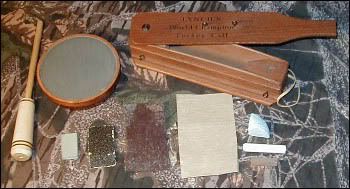
Friction calls come in different models. The slate call is a wooden or plastic dish covered with slate, glass or aluminum. The sound is produced with a stick, called striker. Strikers are made of wood, plastic or fiberglass.

Another friction call that works very well and should be in every turkey hunters gadget box is the paddle box cal. This is the father of all turkey calls. The paddle box is made of wood. A hollow box, the sound chamber and attached at the open end is the paddle. By moving the paddle over the lips of the box the sound is produced.

There are more friction calls but the slate and box calls are the simplest and most effective to use and learn.

Mouth diaphragms:

These calls are placed in the mouth; exhaling air trough the mouth produces the sound. These calls are extremely difficult to learn. The positive side of these calls is that they free up the hands and no movement is needed to produce the sound. The mouth diaphragms are especially good for close work as an incoming turkey looks for movement.

Below I listed most of the common sounds a turkey makes.

Peeping
A turkey poult makes its first sound before it hatches.

Hatching Yelp
The hen answers the poults peeping with the Hatching Yelp. This helps bond the hen and the chicks together and helps the hen recognize each of her chicks.

Predator Alarm
When a predator is flying over or nearby the nest, the hen will utter a guttural, segmented call to warn the poults who will then duck under the hens body.

Plain Yelp
The yelp is a multi-purpose, rhythmic, 3 to 15 note series used to locate other turkeys during the day. The turkey yelp does follow a certain cadence but if you listen to wild turkeys call, they often have skips and half-beats in their series of calls and the number of yelps varies tremendously. Yelping also varies in volume and intensity. Some series of yelps stay about the same volume throughout while others start low, rise in volume and then tail off towards the end. Try and vary your yelping and you'll have much more success calling turkeys.

The yelp is sometimes referred to as the "love call' of the hen and is the one call every hunter should master. This call is used by both hens and gobblers. The gobbler yelp is slower and more deep throated than the hen.

Lost Yelp
A long series of yelps (10 to 20+) used by turkeys when they are lost and trying to call other turkeys to them. This can be used at random in the spring to attract long distance gobblers.

Tree Yelp
The tree yelp is a softer, shorter version of the standard yelp. Turkeys of both sexes tree yelp each morning. This call lets the other birds know that all is well after they wake up in the morning.

Cluck
A soft to loud staccato call used to locate and communicate with other turkeys. It basically is saying "I am here, where are you?". This call is used by both hens and gobblers. Turkeys cluck all of the time and it is by far their most used call.

Cutt
Cutting is a fast irregular series of clucks used by lost or lonely hens who are searching for other turkeys. It is an especially effective call for the hunter in the spring because hens use cutting to announce to gobblers they are ready to mate. They are usually loud and aggressive and last anywhere from 5 to 15 seconds in duration.

Cackle
This is a call most often used by hens when flying up or down from their roosts. It is a 5 to 20+ note call that is also used when flying over clear openings, water ,etc. A cackle is comprised of fast, irregular clucks and yelps. It is followed up with more subtle clucks when the turkey hits the ground. This call varies quite a bit and I've included several samples of fly down cackles.

Purr
A purr is a soft, fluttering or trilling call that is used by both hens and gobblers. It has several meanings and is most commonly thought of as a call used to communicate contentment and relaxation when the flock is together. It is also used by birds while they are feeding and in this case it is more of a "spacing" call where the birds purr to tell the other birds "I'm feeding here, give me some room." This is a very good call to coax the gobbler in the last few yards. There is often a cluck before and sometimes after a purr.

Aggravated or Fighting Purr
This is the loud aggressive purr emitted by gobblers and jakes as they posture to fight for dominance and the right to breed. Hens will also purr aggressively when they are upset and looking for a fight.

Get a couple of push-pull turkey calls and give the fighting purrs a try this spring. Turkeys love a good fight and you'll sometimes be stampeded by a group running up to get in on the fun. It is also a great call for the fall since turkeys are very actively fighting and establishing pecking orders during this season.

Gobble
Toms gobble for two main reasons - 1) To attract hens and 2) to proclaim their dominance over subordinate males. They will, however, shock gobble to just about any loud noise. The typical gobble lasts about 2-3 seconds. Most gobblers can control the intensity of their gobbling and generally older toms will have much deeper, full-throated gobbles. But don't let the gobbling fool you. Hens have been known to gobble and have a try at strutting also.

Spitting and Drumming
A two note pffffft, duuuuuuuummmmmm vocalization forced from a gobblers chest. He drums for the same reason he gobbles---to attract hens. He can drum softly or loudly depending on the location of the hens. On clear, calm days, drumming can be heard as far away as 100 yards. Simulating spitting and drumming is a very effective way to call in turkeys.

Since it is such a low-pitched sound it is very difficult to hear and/or record this sound. Once you've heard it though, you'll never forget it and I've often located turkeys but stopping and listening very carefully for the Spit 'n Drum.

Putt
The putt is a loud, sharp alarm call used when a turkey senses danger or when they see something that seems out of place. Essentially, it is a very loud cluck but with a different meaning. This is one you don't want to hear since it usually means you've been spotted and that the turkey is getting out of there in a hurry.

Kee-Kee
This is the 3-note whistle made by young turkeys when they are lost. It's a very good call for the fall to call in scattered turkeys. I've always found it interesting they call it a kee-kee when a more appropriate name would be kee-kee-kee.

Kee-Kee Run
This is the lost call of the young consisting of several whistles followed by 2 or three yelps like this kee-kee-kee-yelp-yelp. Use this in the spring sporadically with your other yelping. Occasionally, a jake will respond to the call with yelping of his own.

----------------------------------

To inquire or book a turkey calling seminar, or any of our other seminar topics, please Email me for more information and dates availability.

Wednesday, December 06, 2006

Turkey Dinosaur Fossil Found

SALT LAKE CITY - Fossils discovered in southern Utah are from a new species of birdlike dinosaur that resembled a 7-foot-tall brightly colored turkey and could run up to 25 mph, scientists said Tuesday.

Fossils of the meat-eater’s hand-like claw and foot were found in the Grand Staircase-Escalante National Monument near the Arizona border, giving paleontologists reason to believe some dinosaurs known as raptors roamed from Canada to northern New Mexico about 75 million years ago.

Much smaller variations of the dinosaur had been found previously in Montana, South Dakota and the Canadian province of Alberta.

"This is the southernmost occurrence of this group, and it’s about two times the size of the ones up north," said Lindsay Zanno, a doctoral student at the University of Utah who named the dinosaur Hagryphus giganteus, or giant four-footed, birdlike god of the Western desert.

The dinosaur had a strong toothless beak, powerful arms and formidable claws that made it capable of eating animals and plants. Large feathers grew on its hind end, giving it a resemblance to a turkey, Zanno said.

Scientists are not sure what purpose the feathers served, but it was not for flying. "It’s quite different from modern birds," she said.

Mike Getty, collections manager at the university’s Museum of Natural History, found the fossils in 2001. Scientists needed several years to excavate the fossils and publish their findings, he said. "This is the last great, unexplored dinosaur bone yard in the lower 48 states," said Scott Sampson, the museum’s chief curator who wrote the journal article with Zanno.

Source: Seacoastonline.com
Related Posts Plugin for WordPress, Blogger...